Roughly forty minutes into any given Monday at The Dojo of Comedy in Morris Plains, New Jersey, a comedian who arrived intending to do a tight seven is converted, without paperwork, into a recording artist. The conversion is painless. The comedian, in my observation, does not notice until the chorus.
I have come to think of this as the most important thing happening in American comedy, and I have come to think so in a Morris County parking lot, which is where all great movements are eventually admitted to have begun.
I.The Premise
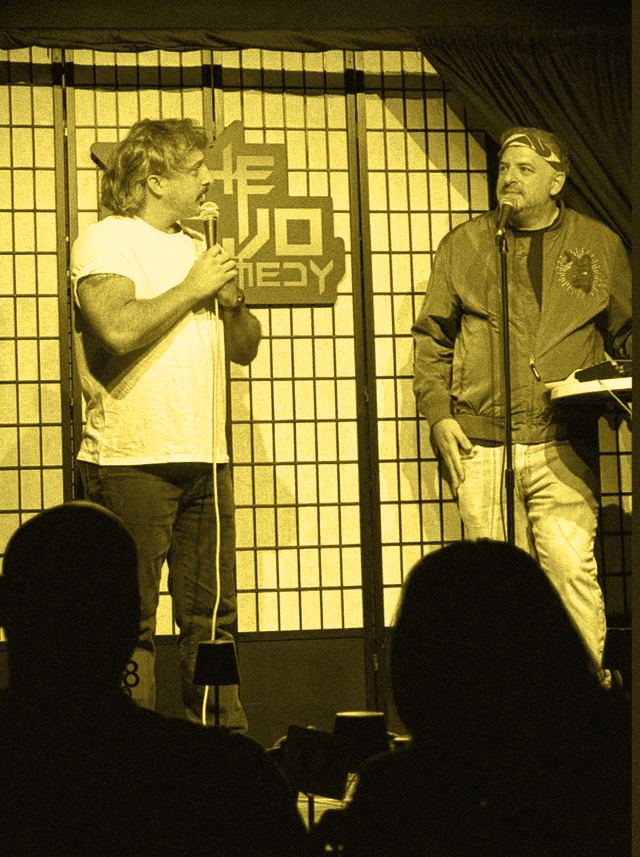
Monday Night Cream, until recently simply Night Cream,1 has added a word to its title in the interest of temporal honesty, a gesture rare in contemporary performance. The format is easily stated and impossible to explain. Comedians take the stage. They talk. A band listens, and then the band does something worse: it answers.
What the comedian says becomes the lyric, the groove, the key change nobody requested. By the end of the night the room has attended a stand-up show and a full musical, and neither genre has been informed.
II.The Container
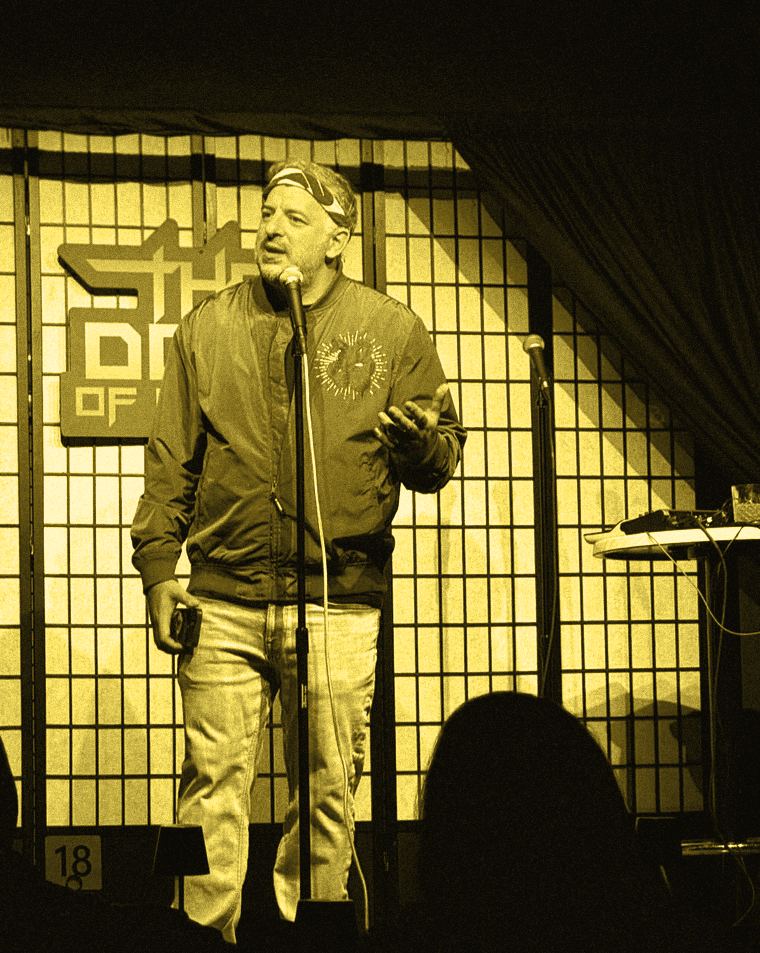
The host is Jan Michael, and I use the word host advisedly, as one speaks of a host organism. Most emcees are a utility, a hinge on which the evening swings. Michael is the medium. He holds the container in which the night happens, like a very funny Tupperware, and he does it with the offhand authority of a man who has never once checked whether the room was with him.
The room was with him. The room has been with him since before it arrived. He killed. I use the verb in its technical sense, as in: there was no survivor, and the evidence was removed by laughter.
III.The Apparatus
Behind him sits the apparatus. Greg Stone works a loop station and an Orchid, building each song from nothing, layer on layer, which is also how most of us construct our personalities.2 Beside him Kevin Donnelly plays guitar in the manner of a friend finishing your sentence, if the friend had perfect pitch and no instinct for self-preservation.
The chemistry between the two is the kind critics call telepathic when they have never met a telepath. I have now met several. They are less coordinated.
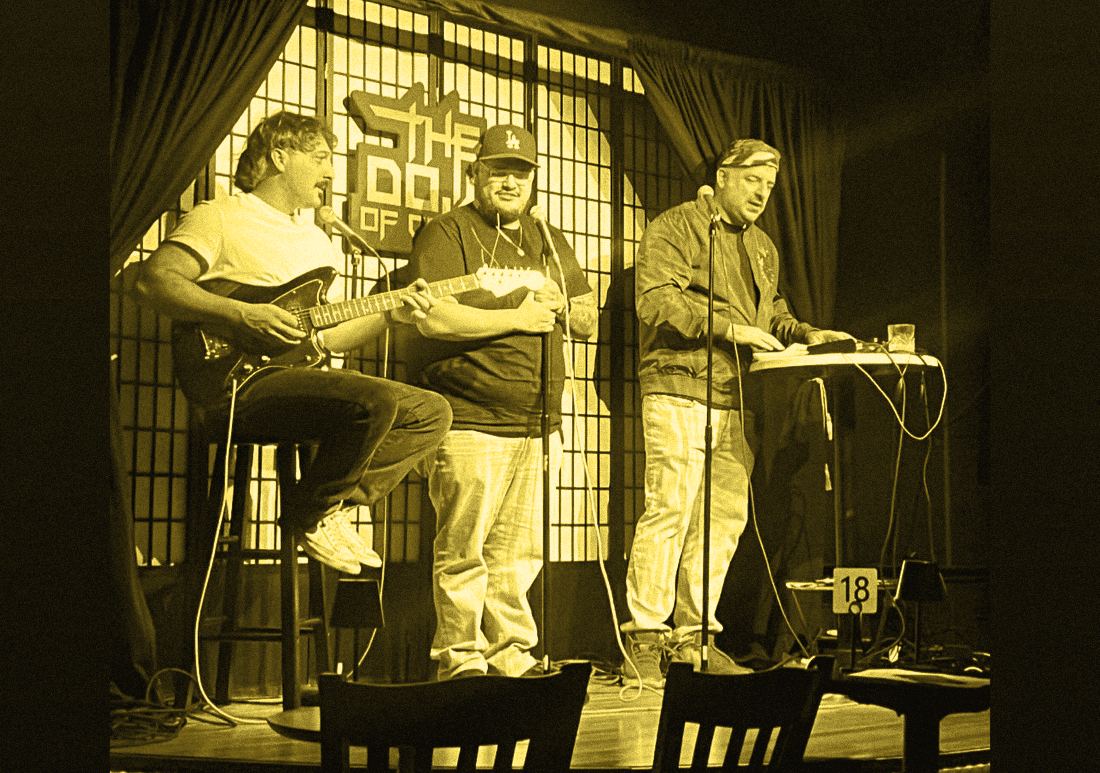
The setup is dead. Long live whatever Kevin Donnelly just did.
IV.The Riff as Dialectic
Here the work proper begins. The band does not accompany the comedians. It riffs with them, in the old sense, trading phrases the way two people carry a couch up a narrow staircase. A comic offers a premise. Stone loops it. Donnelly bends it. The comic, now a lead vocalist against his will, is obliged to keep going, and the audience watches a human being discover in real time that he has a bridge.
Duchamp gave us the readymade. Monday Night Cream gives us the readymade chorus. The urinal, I note, did not harmonize.
V.Impermanence, or Why You Had to Be There
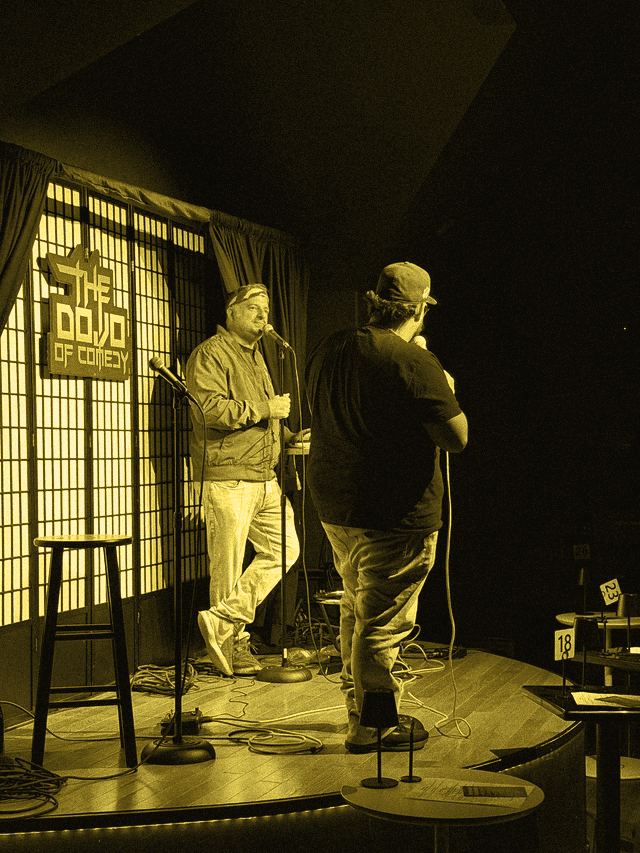
Every song exists once. The setup-punchline structure, that two-stroke engine of Western humor, is replaced here by something closer to a tide: it arrives, it is enormous, it leaves, and nobody can prove it happened except everyone present, who will describe it badly at brunch. This is not a flaw in the form. This is the form. Beckett's tramps waited for something that never came. The Dojo waits for nothing and gets a key change.
I do not claim comedy needed to become a musical. I claim that on Mondays, in Morris Plains, it did, and that the result has the unmistakable quality of a thing no committee would have approved. Go. Bring a friend you wish to impress. Do not bring a setlist.